

Jazz musicians generally age very well. Their most revolutionary and disruptive artistry often comes at a young age, but some of the hippest and most interesting work comes later.
This spring and summer brought four albums from mature alto saxophonists that I have been listening to with care. They are playing very different kinds of music on the sweet, singing horn, and each has a compelling claim for our ears.
Here are some thoughts and reflections on new albums by (in descending order of maturity) Gary Bartz (84 years old), Marty Ehrlich (70), Jaleel Shaw (47), and Caroline Davis (44).
Gary Bartz & Ntu, Damage Control (OYO, September 26, 2025)
The latest recording from Gary Bartz is a surprise and a joy. Is it even a “jazz” album? Who cares.
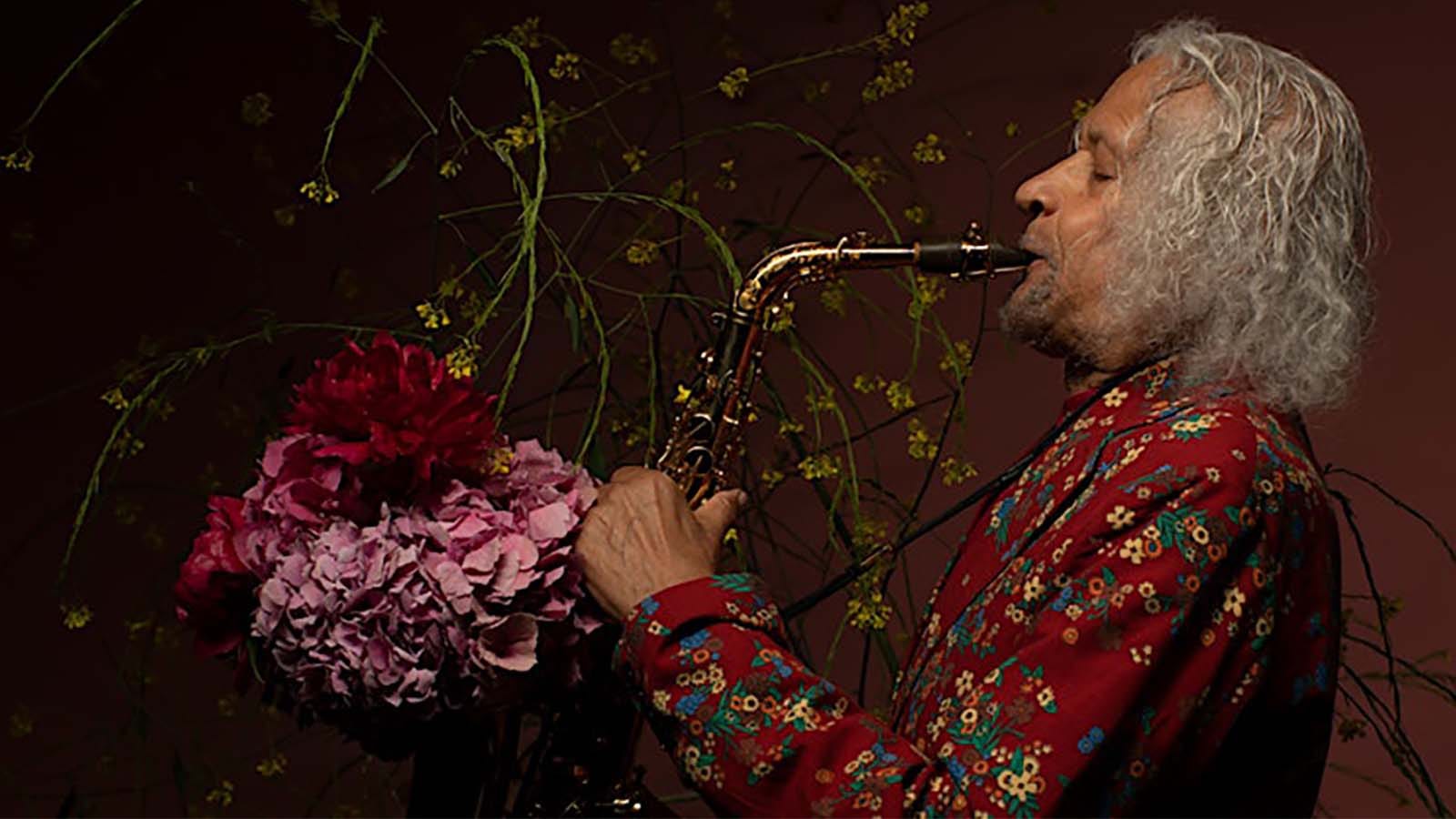
Bartz has been active across seven decades — he came out of Baltimore and went to Juilliard long before jazz was common there, played with jazz titans of the 1960s (Charles Mingus, Max Roach, McCoy Tyner, and Art Blakey), and famously joined and recorded landmark albums with Miles Davis’s most audacious electric ensemble in the early 1970s.
At the same time, he started a notable recording career as a solo artist. His band, NTU Troop, was making political jazz that holds up amazingly well (check out “Viet Cong”, recorded in 1970, with Andy Bey on vocals from Harlem Bush Music - Uhuru), and I consider 1973’s I’ve Known Rivers and Other Bodies to be a 1970s classic, particularly the title track with Bartz on vocals, based on the Langston Hughes poem. He explored jazz and its connection to soul music, he recorded jazz that looked back to the masters, and he kept writing and recording new music in that tradition.
In short, Bartz was out there on the intriguing cutting edge of jazz for a long time, always putting vigor and blues feeling into what he delivers. And, somehow, he is still doing it.
The new record, Damage Control, revives the band name NTU (a word from Bantu, meaning “a profound spiritual and philosophical notion that lies at the heart of the Bantu perspective on life”) and explores a set of popular tunes that Bartz happens to like. And it could have been a late-career embarrassment — featuring guest vocalists, family members in the band, a medley of two songs from one of McCoy Tyner’s oddest albums, sweeps of harp … But I am completely thrilled and charmed by this sincere, soulful swath of good vibes.
Bartz sings his own version of Curtis Mayfield’s “The Makings of You” with Brandee Younger playing harp, Kassa Overall setting up the groove, and layers of keyboards from Barney McAll. And, I’m sorry, but it is hipper than the original, especially when the track closes with Bartz sounding ripe and tender on his alto. Similarly, the Norman Conners track (written by Michael Henderson of funk and Miles Davis fame), “You Are My Starship,” sounds better here, cleaner and cooler. On both of these tracks, you hear Bartz playing the kind of saxophone we used to associate with Grover Washington, Jr. — conversational, blues-drenched, and wonderfully vulnerable. Listen to him close out “Slow Jam” and wonder at how he doesn’t overplay, doesn’t insert bebop where it doesn’t belong, but also elevates the track in the same way that Phil Woods elevated Billy Joel’s “Just the Way You Are”.
The production on this album is by Om’mas Keith, the son of parents who played with Sun Ra and who lived with Bartz for a time as a child. The blend of popular music and jazz is sweetly reconciled on “Biggest Part of Me” (the 1980 hit from Abrosia — you know and like it, whether you like it or not), where McAll and Keith start it out with the chords from Coltrane’s “Giant Steps”, allowing Bartz and trumpeter Theo Croker to get in some smazzy playing that blends into the vocal theme and persists throughout. Slower and slinkier than the original, it somehow becomes irresistible.
The two Tyner songs are from the great pianist’s most commercial album, the currently out-of-print Columbia Records debacle Looking Out. Bartz played on it (along with Stanley Clarke and Carlos Santana) — and it mostly stinks. Yet on this new album, Bartz has rescued two tracks that kinda worked with Phyllis Hyman’s vocals and made them into strong instrumental features for a horn section that includes Bartz, Croker, Kamasi Washington on tenor sax, and Terrace Martin’s alto. Niles Rodgers (guitarist of Chic) and Corey Henry (organ) add to the genuine groove.
I’m listening to this one on repeat because every note is played with feeling. Yeah, it’s “only” a 100% no bullshit soul album with jazz shot through it at most turns. What’s wrong with that? Check out many of these folk behind NPR’s Tiny Desk too — Bartz is 84 and winning with every note and smile.
Marty Ehrlich Trio Exaltation, This Time (Sunnyside, May 30, 2025)
Marty Ehrlich is an alto (and clarinet) player who spent critical time in St. Louis, where he was exposed to the Black Artists’ Group — including Julius Hemphill and Oliver Lake. He moved to New York in 1978 and has been an important voice on the “downtown” scene associated with The Knitting Factory and John Zorn. Though he has a sharp, pleasing tone and has written a ton of music for large ensembles, he is also a player associated with more dissonant, “free” playing.
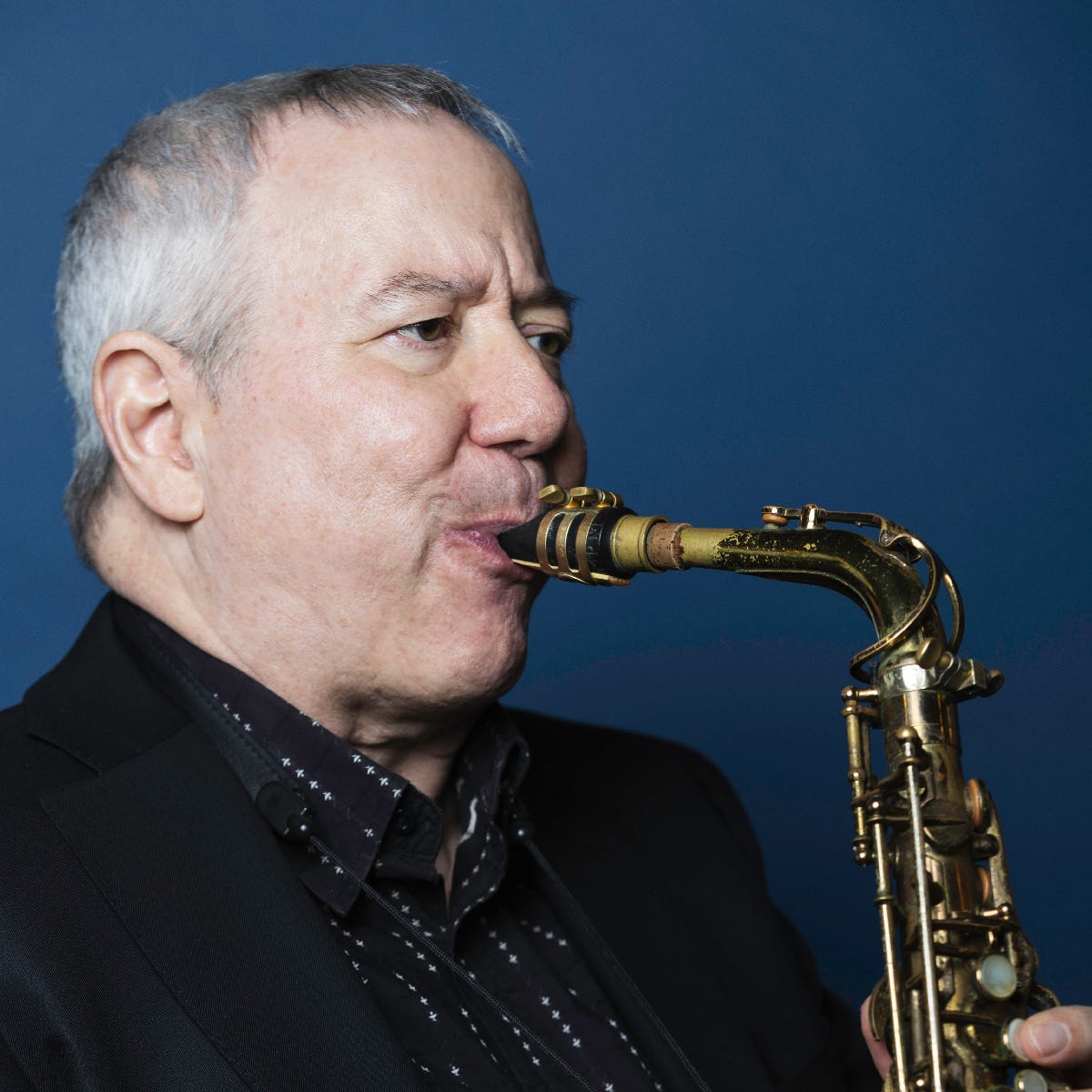
This is the second recording from his “Trio Exaltation” with John Hebert on bass and drummer Nasheet Waits. The band plays hand-in-glove on every track, and the recording quality is fantastic, with every subtlety in this intimate encounter set up for your ears.
Most notable is the pungent sound that Ehrlich still commands from his horn. On his tune “As It Is,” he uses a range of sounds, leaning into a vinegary bite on higher notes and a steely sound in the mid-range. Ehrlich applies vibrato in interesting ways — not just in the “terminal vibrato” spot that is common, but often in the middle of an articulation. He can boom at the lower end of the horn but, when he goes “out” a bit more, he breaks up the purity of his tone with a breathy rasp.
During the solo saxophone start of “This Space, This Time,” the primary interest is less in note choice than variation of tone: full, pipey, quavering, flat, and blowsy. It is a free improvisation, but it develops the most interest for me in the final minute, when Ehrlich settles into a haunting, blues-rich sound. The whole track amounts to a lesson in how a saxophonist can be like a painter, getting a range of textures and colors onto the musical canvas.
On Andrew Hill’s “Dusk,” Ehrlich has his most emotive performance. He begins delicately, caressing the melody with his prettiest sound, but he stiffens the spine of his tone as the interaction with Hebert and Waits increases. I adore this track, with Hebert leaping up and down his fingerboard as Waits chitters on his cymbals and uses clacks against the head of the snare to engage without being loud. Each musician is in conversation, which necessarily means leaving space for the other two. In the final two minutes, the leader bends notes on his horn like a bluesman playing a ballad, using sparing vibrato and pinching a repeated high note that seems to leak out of his alto like steam.
Compared to the Bartz album, this music takes some work — no chording instrument pretties it up, and even the most “composed” tracks (such as the other delicious Andrew Hill song “Images of Time”) take a meandering route to your ear. But this music repays your attention, if you have the patience. Hebert’s bass solo on “Time” is majestic, and Marty Ehrlich provides a commanding master class in alto saxophone artistry. The art he is addressing has little to do with running bebop lines around chord changes. But, like the artist he alludes to on the hip and bouncing “Twelve for Black Arthur” (Blythe), Ehrlich uses his years of work with his horn to write an essay in sound.
Jaleel Shaw, Painter of the Invisible (Changu, July 11, 2025)
In 2021, I wrote about three saxophonists who had recorded solo sessions during the pandemic. Jaleel Shaw’s entry, Echoes, featured some electronics, a ton of melody, and plenty of adventure. His new recording is for quartet, with his longtime collaborator pianist Lawrence Fields, bassist Ben Street, and Joe Dyson on Drums. It is a lively and straight-ahead date that features superb modern playing.
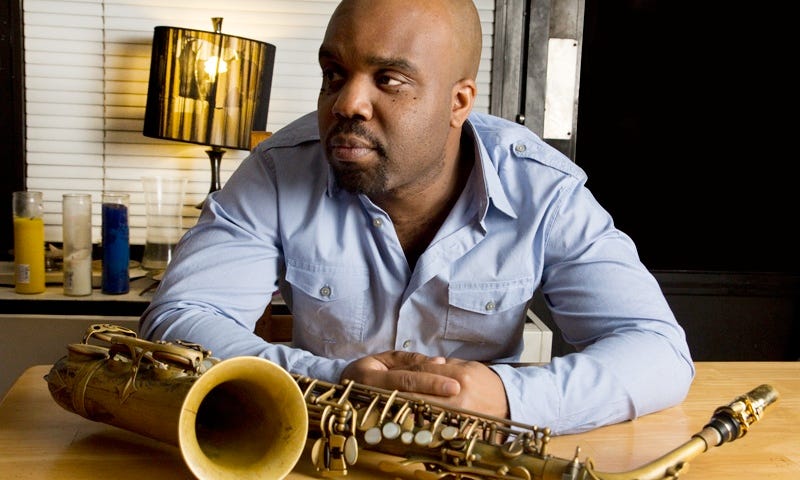
It seems instructive to compare and contrast Shaw’s sound with those of both Bartz and Ehrlich. When Shaw wants to play beautifully, as on the brief opening track “Good Morning,” you would be hard-pressed to find an alto saxophonist with a sound (other than Bartz) more like the warm, rising sun. It is equally true that he can conjure a tough/flat modern sound like Ehrlich’s but with a bit more scamper to it. On “Baldwin’s Blues”, Shaw darts to and fro, sharp-toned and mostly without vibrato, meaning serious business. Not that he sounds mathematical or unfeeling — it is a blues that invites some slight fraying of purity as the solo concludes.
I am totally enamored of Shaw’s full but flutey sound on “Gina’s Ascent,” a song with a simple, aching melody that hops above the octave-apart lick played by bassist Ben Street and vibraphonist Sasha Berliner. The closing ballad, “Meghan,” might catch you by surprise as well, with Shaw nearly as pure-toned as a synthesizer as he puts things across on soprano sax. It is a measured performance that refuses any fancy footwork, almost as spare as an Ehrlich tune and almost as soulful as what Bartz is up to.
Forced to compare Shaw to another saxophonist, I am not inclined to reach back in time but to say that he sounds like the very best players of his or a just-slightly older generation. Even though Cannonball Adderley influenced everybody after him and Charlie Parker remains the longest shadow on the instrument, Shaw has the modern sheen of Steve Wilson and the steely improvising brain of Steve Coleman. His solo on “Beantown” is crisp and relentless, pushing at the edges of harmony but never busting loose.
And his tone is modern in that way too — clean and forceful but simply too professional to grate. A younger player like Immanuel Wilkins — with his delicate but modern sound — has surely listened to Shaw. But Shaw has that weight to his sound, in the way that Darius Jones does.
The writing on Painter of Invisible also happens to be impressive. “Distant Images,” which features guitarist Lage Lund, puts a single repeated phrase through different rhythmic and harmonic variations to hypnotic effect before spinning a more eclectic melody into existence. When Fields comes in to play in unison and then to harmonize, you will be entranced. “The Invisible Man” has the thrilling openness of a Pat Metheny tune — something that feels like it is always on the edge of launching upward.
“Tamir (for Tamir Rice)” is a stately theme, dignified and heavy, as befits its subject. For the improvisations, Shaw sets up a vamp that alludes to Coltrane as directly as possible, however, letting the stillness of the theme become overwhelmed by emotion.
When the album closes with “Until We Meet Again,” I expect you will be nodding: I hope so. Fields plays chiming arpeggios on a Fender Rhodes as Shaw uses his most delicate alto saxophone sound to remind us why this enchanting horn is one of jazz’s emblematic voices.
Caroline Davis and Dustin Carlson, Sprites (Out of Your Head, August 29, 2025)
Caroline Davis is too established to be considered a rising star on the alto, but she remains underappreciated. Her album Heart Tonic (2018) is one to catch, and I adored her Anthems from 2020, made as part of the duet “Persona” with Rob Clearfield. Sprites is also a duet project, created with guitarist Dustin Carlson, wholly improvised, and recorded live.
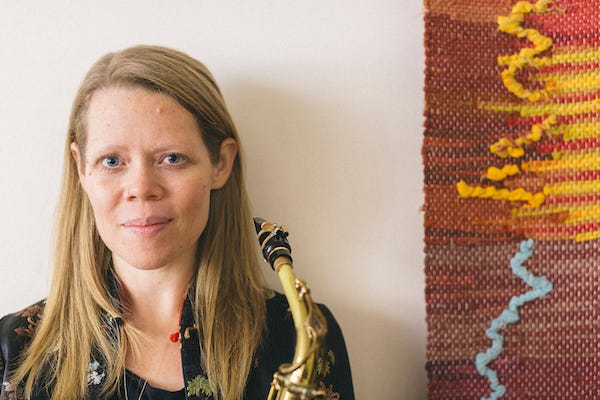
Like Ehrlich, Davis also moved to New York from the Midwest (Chicago), and she was born overseas, moving to Atlanta when she was six. She reminds me of Ehrlich in some ways — she produces a wonderful alto sound and plays with a warm tone, but what she chooses to play often colors outside the lines. Neither is a shrieking avant-garde-ist, yet what they play challenges convention with craft.
Sprites is a series of a dozen short (less than five-minute) improvisations, each of which is impressively focused for having been wholly improvised. Fear of this kind of music is understandable: won’t it simply be chaos? But listen to the 94 seconds of “Banana Ruffles,” with its beautiful, repeating synth pattern and Davis’s elegant saxophone melody. She starts in an upper register of the horn that you will swear is a flute and moves down to her standard register. It is beautiful and tender.
The longer “Ghost Lullaby,” which opens the album, features a gentle acoustic guitar arpeggio over which Davis first sings, blending it into a synth loop that continues as she plays a breathy set of long tones on her saxophone. The patterns repeat, mutate, and become hypnotic, then it all winds down into spare guitar/alto harmonics. The next track, “It Feels Human,” eschews the electronics for just acoustic guitar chords, syncopated in what starts as waltz time but quickly becomes snarled and urgent. Davis plays a solo above Carlson that spins variations of small cells of melody. The licks repeat, turn, vary, rise, repeat, and the momentum builds, teasing your ear.
Part of what makes Sprites a work of art is the way the musicians have edited these live performances — we are listening only to excerpts, which are then arranged into a sequence that is extremely compelling. The last track I was writing about, “It Feels Human,” is zipping along with your anticipation rising, when it suddenly cuts off. The next (title) track offers a fluttering contrast: Davis mimicking a bird chirping over a combination of synth squiggles and acoustic guitar. The next tune in the sequence also focuses on acoustic guitar, but this time Carlson plays an accompaniment with flashes of flamenco — completing a three-track sequence that mutates an acoustic guitar sound for this post-modern atmosphere.
Other linked tracks work a similar magic. The contrast between “Asphalt Didact” (a twisting synth/guitar passage that invites Davi’s alto to find Ornette Coleman-like lines that both echo it and complement it) and “Nude” (with echoing shards of guitar, tinkling bells of synthesizer, and saxophone playing in a simple, high, chiming pattern) is refreshing, and the subsequent “That’s Not a Tree” and “C.A.D.” shift the vibe to soulful tension as Carlson plays stuttering single notes in bass guitar register, suggesting how the music can encompass Bootsy Collins as well as Jamaaladeen Tacuma (Ornette’s bassist in the band Prime Time).
For listeners intrigued by the saxophone art of Caroline Davis, I also recommend heartily her 2024 recording, Portals Volume 2: Returning. This record features Davis’ jazz quintet (with Marquis Hill on trumpet and the rhythm section of Julian Shore on piano, bassist Chris Tordini, and Alan Mednard’s drums), but it incorporates special appearances by vocalist Jen Shyu, flautist Nicole Mitchell, recordings of her grandmother (to whom the album is dedicated), spoken word elements, modern jazz vocals, rapping, and tons of compelling writing and improvising that style-hops with great ease. It is varied and extremely entertaining.
Check out “Kites,” with singer Julia Easterlin sounding just as soulful and accessible as any of the singing or playing on the Gary Bartz album this column started with.
The music of these four altos, aged to (varying degrees of) perfection, is not uniform in style, and that’s great. All four artists fly free of anything like jazz “convention” while still channelling the freedom, creativity, and musical diversity that make jazz the most versatile form of the last century.