
Jack DeJohnette
One of the best to ever play jazz, the great drummer (and composer ... and pianist too) has died. The void is unusually broad.

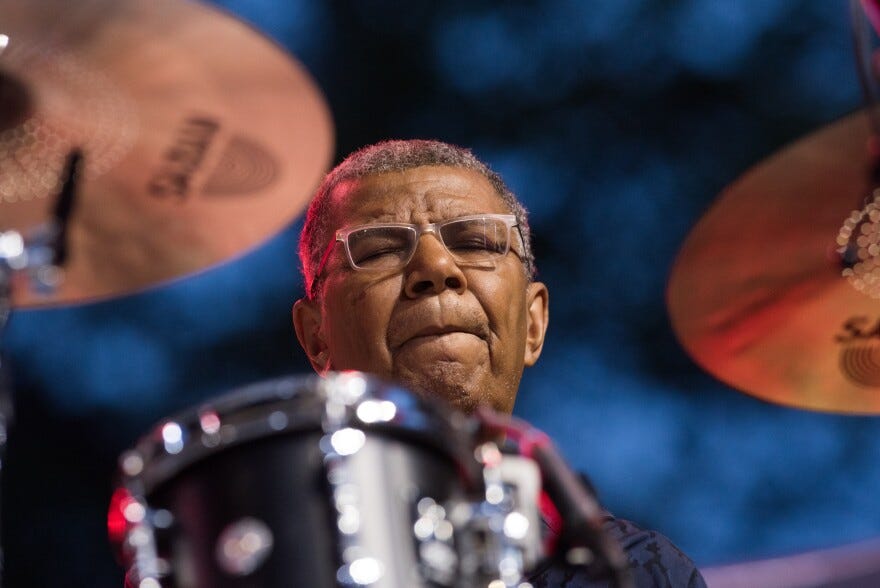
I have found myself in stunned silence this week. The loss of drummer, (underrated) pianist, and composer Jack DeJohnette has hit me a bit harder than recent deaths of other great jazz musicians. Why?
Jack may not have been as historically significant as, say, Wayne Shorter. But he represented more fully how the community formed by jazz is interwoven. Jack — and I’m using his first name simply because he projected such personal warmth in all his interviews — connected disparate realms of creative music and enhanced all of them. He never overwhelmed a band or a recording unless that’s what the music needed. He lifted a huge swath of music. Sometimes he was whisper-quiet, and sometimes he brought crashing power. In either mode, he was supremely musical.
Famously, Jack sat in with the legendary John Coltrane Quartet, subbing for Elvin Jones. He held the drum chair in the Bill Evans Trio for a year, and then replaced Tony Williams in Miles Davis’s “Second Quintet” in the 1960s, becoming the engine behind the “Lost Quintet” with Chick Corea, Dave Holland, and Wayne Shorter as well as the drummer on Bitches Brew. The visionary Charles Lloyd Quartet of the mid-1960s that caused a sensation on campuses? That was Jack playing beside Keith Jarrett, of course.
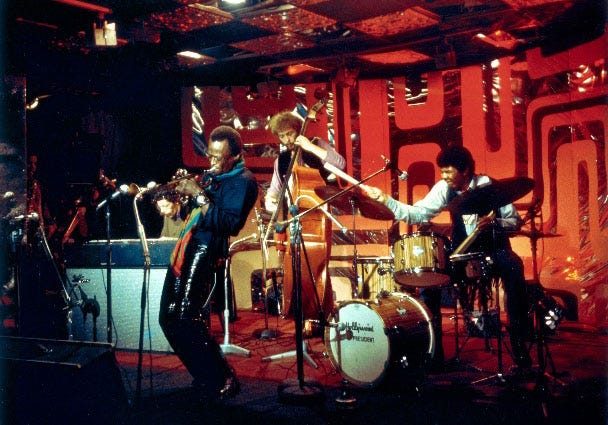
All this came shortly after he relocated from Chicago, where he formed meaningful ties with the founders of The Association for the Advancement of Creative Musicians (“AACM”), such as Muhal Richard Abrams and Lester Bowie. He would spend the next 50 years acting as a bridge to link all the musicians who knew he was great.
If you are reading this Substack, I assume you subscribe to Ethan Iverson’s essential writing at Transitional Technology. His remembrance of Jack is HERE, and it’s wonderful. He makes the point that the music is so rich and wide that most listeners will have a set of recordings they consider to be their DeJohnette. Whatever your choice is, it’s likely great music. Jack simply wasn’t involved with much middling stuff.
Some of the music that Iverson highlights is also my favorite material: The trio with guitarist John Abercrombie and keyboardist Jan Hammer on the former’s Timeless is inspirational “fusion” where the drums are recorded with subtle perfection. The albums with brass genius Kenny Wheeler (especially Gnu High, prominently featuring Keith Jarrett as a sideman as late as 1976) used Jack as an essential orchestrator from behind his throne. Of course, his playing with Jarrett’s “Standards” trio was impeccable but I, too, have always loved the groove that Iverson mentions on “God Bless the Child” from the very first outing of that (seemingly) eternal band. Check out all the material Iverson properly lauds.
But I disagree with Iverson about a section of Jack’s discography he finds “not really to my taste, at least so far”: the albums he led on ECM and later elsewhere between the mid-’70s and the early ‘90s.
To me, these sessions were some of the music that kept serious jazz fans hopeful during a stretch in the industry that was tough. During those two decades, the most prominent jazz records felt compromised by one thing or another. Great musicians, for example, were selling out at a high rate. Freddie Hubbard was on CTI and Columbia, only occasionally sounding like himself, before he lost his chops. The Marsalis debut in 1982 stirred excitement about daring acoustic jazz for a moment, but a new conservatism quickly took hold. At the same time, a saxophonist named Kenny G(orelick) started a career that would soon turn into the buzz phrase “Smooth Jazz”. The exciting jazz-rock and jazz-funk that came from that early ‘70s Davis camp morphed into too much baroque synthesizer overuse in Return to Forever, later Corea electric bands, and Weather Report.
Jack DeJohnette, however, used that time to form unique bands and record idiosyncratic music that went in every direction at once. Jack’s bands — Directions, New Directions, Special Edition, and the cooperative band Gateway — played a range of styles and never seemed calculated or cautious in recordings for ECM, Impulse, and even the new Blue Note.
Here is some of my favorite music from that part of Jack DeJohnette’s career.
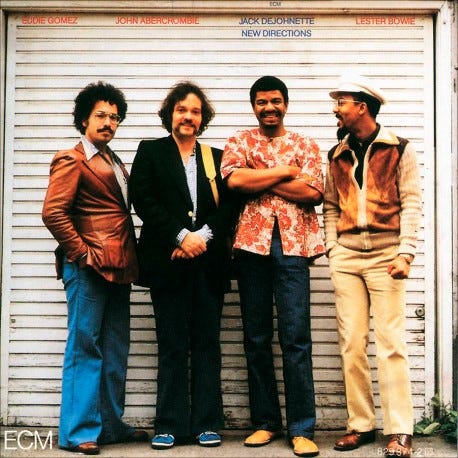
New Directions (1978, ECM), featuring bassist Eddie Gomez, John Abercrombie’s guitar, and Lester Bowie on trumpet, is one I return to often. Bowie is typically sly but also highly lyrical. “Where or Wayne” (interpreted at the time as a commentary on Wayne Shorter’s seeming disappearance into Weather Report’s growing fusion morass) is a theme that shifts from intense to lyrical in a second, and I think that “One-Handed Woman” is a superbly coherent and suspenseful collectively improvised studio jam. And here we find the quartet’s performance of DeJohnette’s most haunting composition, “Silver Hollow” — a perfect eight minutes of music.
The band Special Edition took many forms over the years. The woodwind duo of John Purcell and Chico Freeman is perfection on “Ebony” (from 1982’s Inflation Blues), where we also hear Jack overdubbing his expert jazz piano. The same band sounds like a strong version of a Mingus group on the title track to 1981’s Tin Pan Alley.
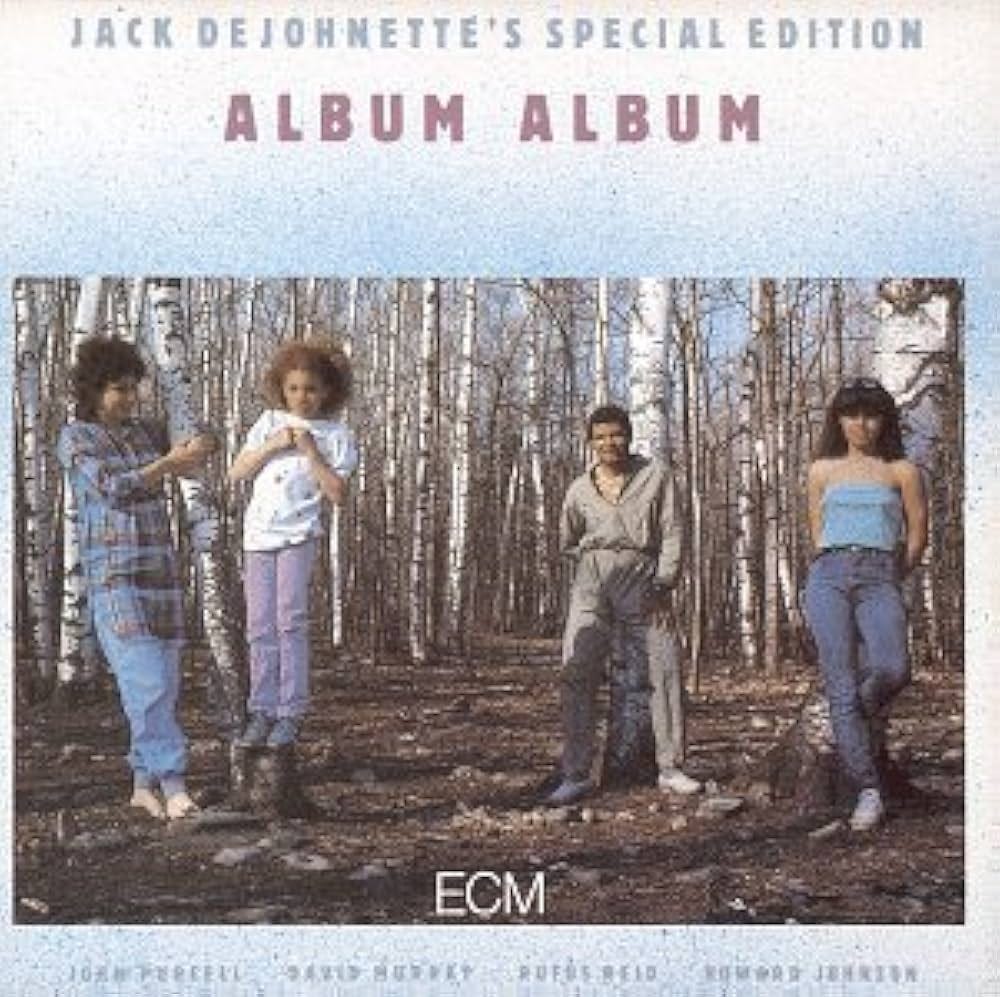
I am also partial to 1984’s Album Album, a quintet version of Special Edition with tenor saxophonist David Murray, John Purcell on alto and soprano, the incredible Howard Johnson playing baritone sax or tuba, and bassist Rufus Reid. Jack allows himself to play electric keyboards and even some guitar here, and it leaps with joy. “New Orleans Strut,” for example, never sounds like “fusion” but it is rich in groove and pulsing electronics, particularly as Murray reaches for screeching notes. The album also contains a beautifully orchestrated version of “Monk’s Mood,” with an unforgettable Johnson solo on baritone sax.
Later versions of Special Edition featured Greg Osby on alto, Baltimore’s Gary Thomas on tenor, and bassist Lonnie Plaxico — a band that was always exciting. The title track from Earth Walk (1991, Blue Note) is as good as any example of the highly touted “MBASE” music that was coming out at the time, with the added plus of having Jack himself on drums. “Where or Wayne” gets a re-interpretation, and “Monk’s Plumb” is as good a drum performance as you will hear, with Jack actively keeping time and interacting the band in his multi-directional style — as thrilling as any drummer has ever been but (somehow) doing it with virtuoso humility.
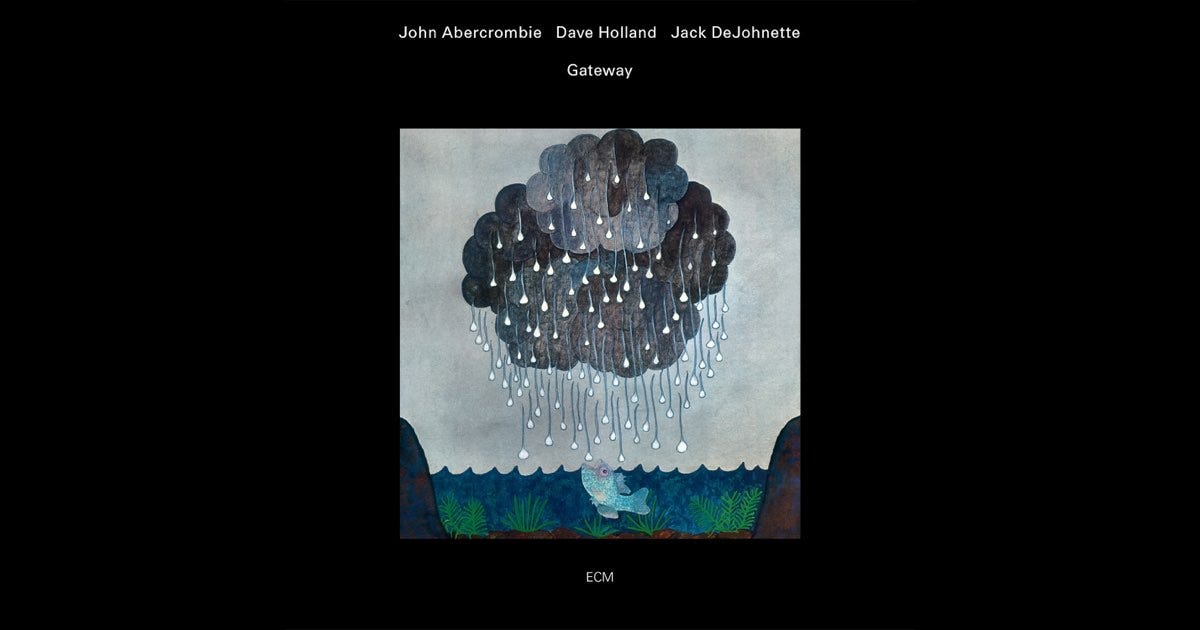
I think the two later recordings by Gateway have been overlooked somewhat. Joined again by John Abercrombie’s guitar and bassist Dave Holland, “Shrubberies” from 1996’s In the Moment is outstanding impressionism, and Jack’s quietly clattering Latin groove on “Modern Times” from 1995’s Homecoming is a perfect example of how the drummer could dominate a piece of music in the quietest way possible.
And while the two decades from 1975 to 1995 were arguably peak Jack DeJohnette, he was making great music in the new century as well. He and his wife Lydia started their own label, Golden Beams, in 2005. I am a particular fan of his Trio Beyond with organist Larry Goldings and guitarist John Scofield, which released the live Saudades in 2006. Appearances as a co-leader or sideman never really stopped, whether with heavyweights (Herbie Hancock, McCoy Tyner, Pat Metheny, Sonny Rollins, Wadada Leo Smith, Michael Brecker, Geri Allen) or rising stars like Rudresh Mahanthappa.
Jack DeJohnette, you are the best that this music has to offer. I am thinking about and listening to you.
Jack was instrumental to shaping my jazz mind (as a non- musician) basement drummer. My entire Family are excellent players, but I am the obsessive Jazz enthusiast. Jack stunned me once in 2005 with Latin Percussion Ensemble. Never realized his Clave chops! INSANE. Saw him many times live.
What a UNIQUE approach.
BRILLIANT 👏. ALL your words validate my obsession & total love for Jack. I started in 1974 buying hus records, seeing him live etc. RIP " JACK"