
Jazz Piano in 2025
Here are five very different piano recordings that show how jazz improvisation at the keyboard can shine today: Matt Mitchell, Denny Zeitlin, Sullivan Fortner, Michael Wolff, and Matthew Shipp

I will confess up front: the piano is the instrument that I play most frequently, at home and out in the world. (I also play the alto saxophone.) After the obligatory years taking classical piano lessons, I decided I wanted to understand the art of heroes like Cedar Walton, Horace Silver, and Herbie Hancock — and I was also drawn to the way that Fats Waller, Earl Hines, Nat Cole, and Duke Ellington had built a tradition on the instrument.
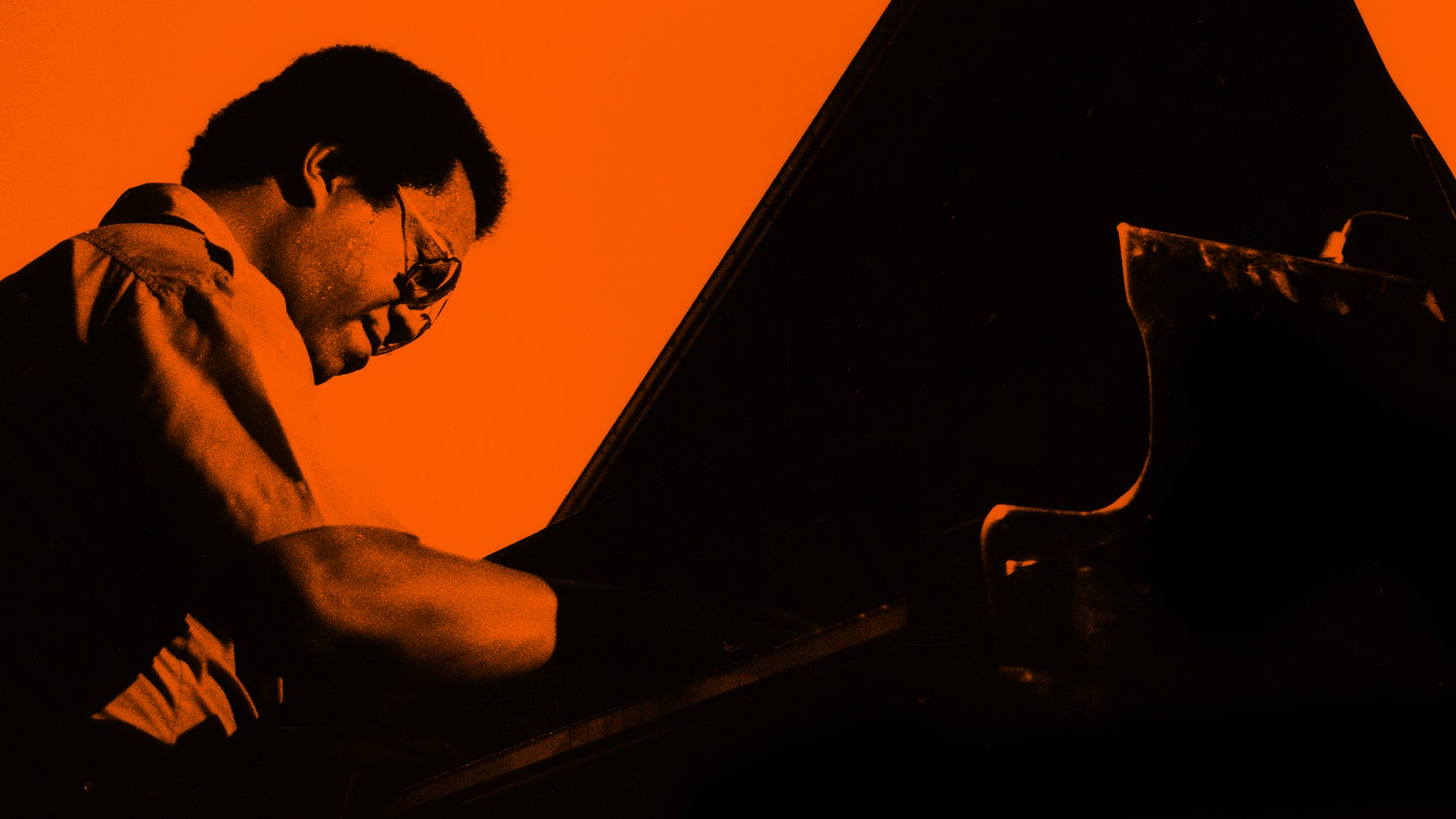
When I listen to the best pianists today, I get the feeling that I should quit playing — I’m so far from the mark. (I don’t — the solace, beauty, and fun of jazz at the keyboard is my daily joy.)
Equally joyous, however, is listening to what the masters of the form are doing to elevate the art. As is always the case, 2025 has given us mind-expanding extensions of what jazz piano can achieve. (I wrote early last year about how good 2024 was for jazz piano.)
Here are five recordings to check out — all very different. And that is the point. There is no single way to improvise with power and deep feeling on the piano. Whether you are operating very specifically within the jazz tradition or bending the rules with wild intelligence, playing in a band or playing solo, possibilities are endless.
Matt Mitchell, Sacrosanctity (Obliquity, May 2025)
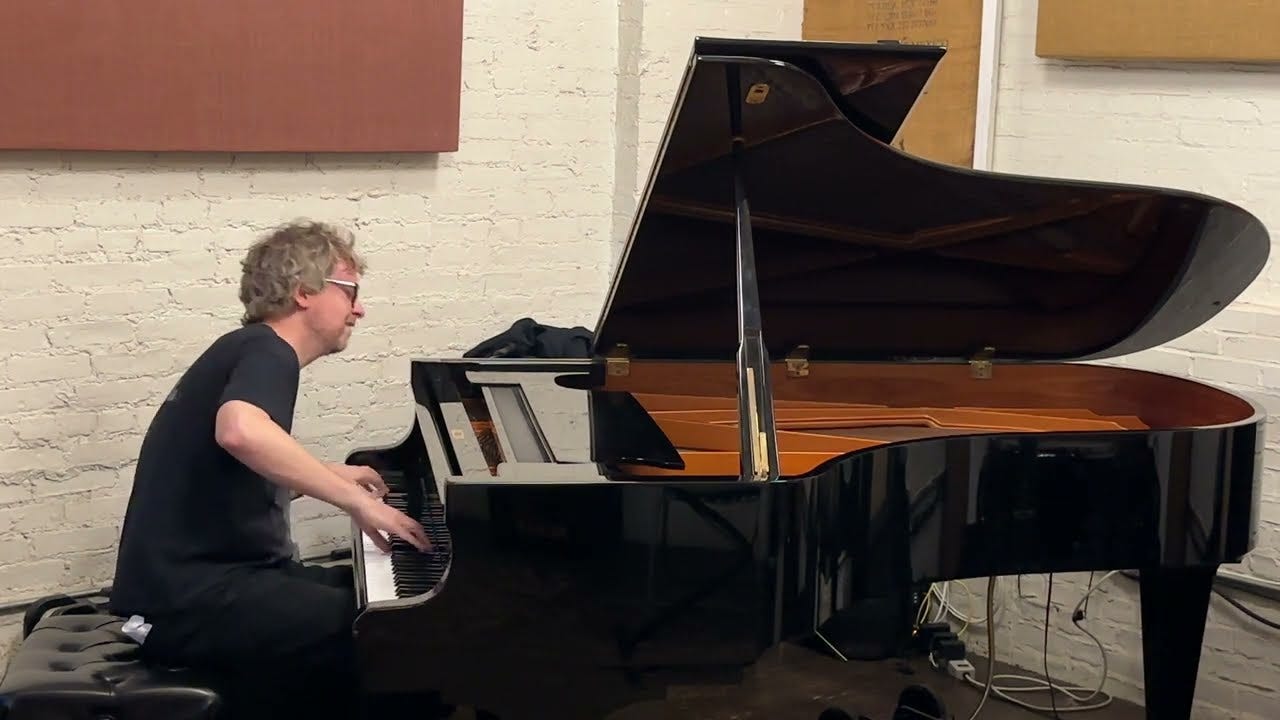
Matt Mitchell’s new set of entirely improvised solo piano music was recorded in a studio on the same day as 2024’s Illimitiable. Sacrosanctity is just as good and, if anything, slightly more approachable for being a group of seven tracks at ballad tempo. The first set was busy with patterns that ripped and swirled — a pianistic act of astonishment but also a group of four performances that showed how Mitchell can pull order and lyricism out of compulsive, repeated patterns.
The second album from this session is also improvised on the spot and presented without editing. This is, of course, the format that Keith Jarrett made famous in the 1970s, and Mitchell’s work — while knottier than Jarrett’s and unlikely to make an independent record label suddenly rich and well-known — contains some of Jarrett’s musical DNA. “Fillip Leaps” is an eight-minute track that begins with compulsive patterns expressed as cycled melodic phrases (not quite arpeggios, but leaping melodic patterns that rise and fall) that outline harmonic movement. Like Jarrett, Mitchell establishes the form and feeling and then shifts to other, related episodes. The tempo decelerates a couple of minutes in, and Mitchell turns his two hands into independent melodic lines, which allows him to begin spinning a rhapsodic right-hand melody that takes flight with as much drama and virtuosity as any on a Jarrett solo album. This direction shifts after a few minutes to contrapuntal two-handed playing that finds Mitchell in a more chordal mode. The two approaches then merge in the final two minutes of the performance, as a rising single-note melody is lifted higher by left-hand chords that elevate the emotional state of the piece closer to ecstasy.
Mitchell establishes a ballad mood on “Skein Tracing” by using upward-swept chords that ring as they create a specific, blue-tinged melody. While the harmonic pattern is not repeated plainly enough to make this sound like classic song form, the beauty of its less-than-three-minute length is hypnotic and enchanting.
Similarly, on “Sacrosanct”, Mitchell makes exquisite use of the pedals of his piano to allow chords and, sometimes, individual notes from the chords (how does he do that?) to linger in the air. This resonant, curious mood supports an unfolding melody that sounds as powerful as if it were composed. The reference here would not be Jarrett but Bill Evans, whose command of ballad artistry is plainly part of Mitchell’s consciousness. The track is a pastel masterpiece.
Other tracks beguile in contrasting ways. “Gnomic” is a two-minute miniature while “Hibernaculum” is a big, patient performance that unspools ideas with the logic of a classical sonata across 17 minutes. “Thither” is texturally outstanding — with featherly two-handed playing in the upper register to start, exceptional tonal playing for two melodic lines in the center, and then the introduction of a few resonant bass notes in the final two minutes that allow the lightness of the performance to be anchored. It is my favorite of the seven performances.
Matt Mitchell remains the most playful of the jazz pianists who also love abstraction and difficulty. This set, with its open spaces fully balancing moments of complexity, may be his most satisfying recording yet.
Denny Zeitlin, With a Song in My Heart, Exploring the Music of Richard Rogers, (Sunnyside, June 2025)
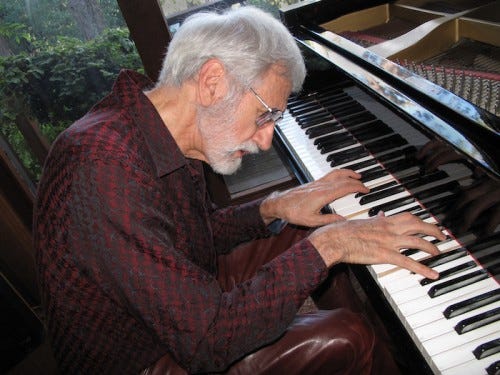
This set of compositions by the ingenious Richard Rogers is performed solo by pianist Denny Zeitlin — now almost 90 years old and also a practicing psychiatrist. Zeitlin is as much a firebrand and a jazz piano classicist as Matt Mitchell, just in his own way. He has experimented with electronics and free improvisation too. And, in so many ways, this live set recorded in 2019 shares the strengths and beauty of Mitchell’s ballad improvisation.
Though Zeitlin is exploring the work of a man who almost defines Tin Pan Alley songwriting, his harmonic and structural imagination pulls apart these vintage tunes and turns them into shifting landscapes. Your ears will recognize the superb melodies, of course, but you will also follow Zeitlin’s explosion and reintegration of them with baited breath.
His fantasy on the South Pacific tune “Happy Talk”, for example, is expansive and episodic. The original song is a zippy little thing, and Zeitlin dissects it here across almost nine minutes, taking one motif at a time and transforming each one in a free-associative, daring improvisation. It is a wild ride that veers away from song form and standard harmony in ways that defy this being a set of “standards”.
Zeitlin defines his take on “I Didn’t Know What Time It Was” with a counter-melody in the form of a prominent, modern bass line over the A section of the tune. Zeitlin uses that element of his arrangement to put the song into propulsive 7/4 time — and to turn his improvisation into a death-defying two-part conversation of leaps and twists. He counters this with some sections of wistful high-register reharmonization. I dare you not to like it.
Not all of With a Song in My Heart does so much to obscure the original sources. Zietlin’s take on “I Have Dreamed” (from The King and I) serves the original melody, absolutely, and the slow bossa pulse beneath this ballad reading suggests the kind of yearning the song was designed to express. “Wait Till You See Her” is a gentle waltz that requires little change to achieve its effect, but the pianist simply demonstrates the power of the art form as he weaves a highly pianistic improvisation, letting his left hand invent new ways of arpeggiating the chords as the right hand does more than simply jam out a new melody.
With all of Zeitlin’s playing, the strength and independence of his two hands create fresh ideas and surprises that only an improvising pianist is capable of. He works orchestrally, with two hands, ten fingers, and one imagination that connects it all. On his dramatic version of “Everything I’ve Got”, Zeitlin incorporates thumps on the wood of the piano and manipulation of the strings inside the piano to generate percussive textures in conversation with traditional technique. During “Johnny One Note”, his left hand repeats a strong, repeated chord to urge on thrilling right-hand exploration as surely as Professor Longhair (or Keith Jarrett) ever did.
Denny Zeitlin has always been a serious jazz pianist (I encourage you to seek out his 1970s records, which incorporated electronics, as well as his exceptional duets with bassist Charlie Haden on Time Remembers One Time Once on ECM from 1983). And he is still going strong after six decades. His exclusion from the standard list of essential modern pianists may be a result of being a West Coast musician for all these years or for his decision to divide his career with medicine. But you don’t have to honor that exclusion!
Sullivan Fortner, Southern Nights (PIAS, February 2025)
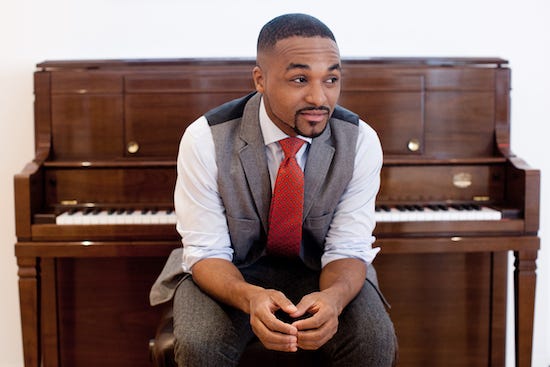
If Sullivan Fortner has become known mainly as a sideman (he is Cecile McLorin Salvant’s duet partner, and was key part of Roy Hargrove’s band from 2010-2017), this exultant trio album shows him as a delightful leader. His range of influences and references is wide, but the identity of the trio on Southern Nights is focused: loosely playful, swinging, and unafraid to take chances.
Along with bassist Peter Washington and drummer Marcus Gilmore, Fortner covers songs across a wide spectrum. He is from New Orleans, so opening with Allen Toussaint’s “Southern Nights” (covered and made a hit by Glen Campbell in 1977, two years after the original version) is a natural, and it will hook you. When Fortner plays the melody with his left hand and improvises a high piano part in the NOLA funk tradition, it is enchanting.
The album contains many colors. The rare cover of “Organ Grinder” by trumpeter Woody Shaw is top-notch contemporary jazz piano, with a potent bass line, potent four-on-the-floor swing, and a piano solo that effortlessly mixes bebop with freer impulses inherited from players like Don Pullen. “Waltz for Monk” (composed by pianist Donald Brown) is light-hearted but offers Gilmore the chance to show off all across his kit. The Tin Pan Alley classic from Cole Porter, “I Love You”, offers a surprisingly off-kilter Fortner introduction, followed by vigorous back-and-forth among the players, sounding like a new-century version of the Red Garland Trio.
The Cuban bolero “Tres Palabras” gets a near-definative jazz reading on Southern Nights. Fortner, again, states the melody with his left hand while coloring it in treble embellishment, Washington plays an extremely melodic solo, and then Fortner builds his solo from one insistent descending six-note lick, which he trades between his two hands and alters for effect. For a sweet ballad, it’s great to hear a tune by Bill Lee (“Again, Never”).
There are still some mighty fine and “traditional” piano trios — the list is too long to start here. But the joy in this recording is realizing that the format can still reflect individual artists and their vision with clarity and power. It is an unpretentious joy.
Michael Wolff, Sunny Day (Sunnyside, September 2025)
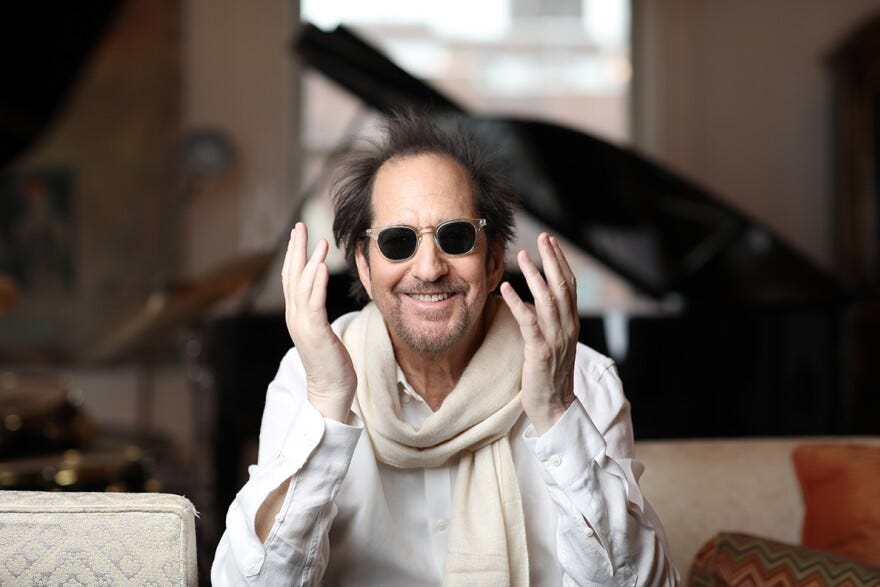
Pianist Michael Wolff was also raised in New Orleans, but he moved to Berkeley, California, and played music in the renowned Berkeley High School program. His history of playing with Cal Tjader and Cannonball Adderley tends to be forgotten because he became the music director for Arsenio Hall’s ‘80s/’90s network TV talk show. But showbiz gloss aside, Wolff can play. Since 2019, he has been working with the formidable rhythm section of bassist Ben Allison and drummer Allan Mednard and recording for the Sunnyside label.
His latest recording is not only a slick and beautifully recorded session that is recommended for just about anyone (not just jazz aficionados), but also a quiet experiment. Looking to meet a moment when music confronts technology in various ways, Wolff created most of the tracks here by generating rhythms and textures from electronics, then improvising forms and melodies at the piano, setting them down as through-composed ideas, and only then inviting his trio to perform along with the electronics in the studio.
The results are exactly the kind of “smooth jazz” I can get behind — I am a famed hater of smooth jazz, you may recall — a crown I wear self-consciously and with some irony! To be sure, a track like “Flutter” would probably have made a playlist alongside Bob James or David Sanborn back in the day. The texture and groove are irresistible, and the sonic sheen can’t be denied. But the electronic inspiration works so well because Ben Allison’s fat acoustic bass solo is utterly human and inspired. Mednard syncs up with the electronics seamlessly and lifts up a long-form piano theme that is unhurried and fresh. And, when the leader improvises, it is with a chill grace, his hip single-note lines supported by pastel chords placed with perfect rhythmic swing.
“Movie Night” has the most prominent electronic pulse setting up Wolff’s relaxed theme. It may not be to every jazz enthusiast’s taste, percolating out front with Allison funking the bottom of the track on bass, but once the trio really kicks in at the 2:30 mark, Mednard provides the lift, and you can’t get the rising chordal figure composed by Wolff out of your head. The trio carries the song through to completion. “Streetcar” begins with an electronic percussion loop as well, but the merits of Wolff’s composing take over and carry a full performance, highlighted by a set of climactic pulses that Mednard works with like a latter-day Steve Gadd. In contrast, I adore the patience of “Swamp”, with only the merest hints of electronics except as they glisten at the edges.
Additionally, the trio plays some straighter stuff — the hip title track, the melody played in octaves by bass and piano, and “The Mews”, which makes the strongest possible case for more jazz pianists using a Fender Rhodes electric piano for ballads.
The album closes with Wolff playing solo piano on The Beatles’ “In My Life”. He reharmonizes it slightly and uses some delicious rising left-hand octaves to push the song’s feeling. But best of all, he doesn’t really take off on an improvised solo — this is a classic pop song that is simply recast through a fresh harmonic vision. That is enough. Sometimes simplicity and beauty are enough, even on a jazz record.
Matthew Shipp, The Cosmic Piano (Cantaloupe Music, June 2025)
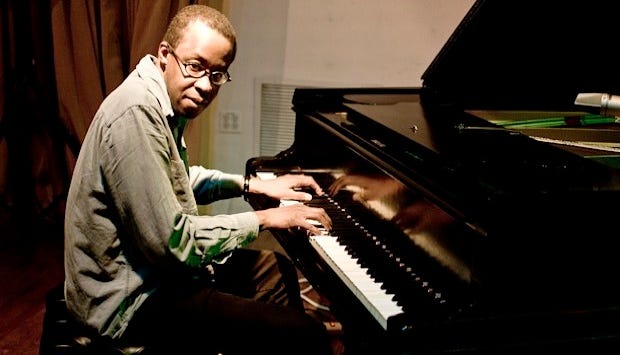
I am bookending this reflection on 2025 jazz piano with a second solo recording of wholly improvised music. Matthew Shipp is extremely prolific, and one might fairly ask what each successive recital adds to his canon. To compare each release to the next would be a near-impossible task, however joyful.
On The Cosmic Piano, Shipp affirms that his style of “free” pianistic improvising is powerfully focused, even as it is spontaneously structured. This music is not built on the kind of consonant and irresistible melodic material that the Michael Wolff recording offers, but no one could listen to Cosmic Piano and think that a musical naif was experimenting at the keyboard. Shipp is technically superb, playing with touch and facility, and the musicality that he lives every day allows him to conjure structured dramas of sound that cohere as “compositions” even if they aren’t written in advance.
Two comparisons come to mind this year. One is the Matt Mitchell album with which I started this column. Mitchell and Shipp share some inclinations, but their playing sounds utterly different. Mitchell is a maximalist, even on a ballad-oriented collection like Sacrosanctity. He discovers melody and creates development from what seem to be criss-crossing lines and dense texture. In his virtuosity, Mitchell is the Art Tatum of 21st-century free improvising. Simply following the many strands he sets in motion on any given track is exciting.
Shipp is closer to the Thelonious Monk of this style. He plays with relatively fewer, highly deliberate notes. On a track like “The Other Dimensional Tone”, he plays chiming chords and focused two-part inventions in wandering but fully consonant harmony. At the end of “Piano’s DNA Upgrade”, he definitively ends the track with a single chord repeated almost 50 times in percussive succession.
Both Shipp and Mitchell are performing a magic trick: to discover musical logic from thin air without leaning on obvious intervals or traditional chord patterns. That they do it so differently amplifies my appreciation for both artists.
The other comparison is to the curious EP (just 16 minutes across seven tracks), 7 piano sketches, from André 3000. Recorded on the musician’s iPhone in low fidelity, this set of improvised piano miniatures aspires, I think, to do what Shipp is doing. Inadvertently, I imagine, it simply makes clear how towering, astonishing, and artful Shipp’s work is — like having Lebron James hold Lego man in the palm of his hand
André 3000 fools around with some motifs, repeats them, fills in some chords, and then returns to the earlier motif for three minutes on “bluffing in the snow”. He plays a few jazzy chords in which is bass note is not the root, until he moves into a “Take Five”-ish vamp on “hotel lobby pianos”. It sounds like Vince Guaraldi for a moment, before it is cut off as if in error. He plays some parallel harmonies on “off rhythm laughter” and lays in a sample of, well, laughter.
The noted jazz critic Hank Shteamer rated the album 7.0 out of 10 in his Pitchfork review, writing that some of the music “vaguely recalls what McCoy Tyner” played on the classic Coltrane recording of “My Favorite Things”, then adding that the music isn’t “jazz” and doesn’t really bear comparison with artists like Thelonious Monk, Joni Mitchell, or Stephen Sondheim, who André 3000 cited as influences on social media.
I am not here to run down André 3000 or Mr. Schteamer, both of whom have done wonderful work. And clearly some listeners have drawn pleasure from the naive and essentially unskilled 7 piano sketches.
But Matthew Shipp brings a command of the piano, an understanding of composition, a deep connection to the history of jazz, and a genuine comprehension of artists such as Tyner, Monk, Duke Ellington, Andrew Hill, and many others to his improvising. His years of study, consolidation, and playing with other dazzling improvisers inform how his relatively spare piano improvisations blossom outward into revelation.
Superb jazz piano requires all of this, plus the imagination to find new wonders in those 88 keys. Whether in the form of a traditional but exploratory trio (Sullivan Fortner’s release), a band experimenting with electronic to achieve high-gloss lower (Michael Wolff’s new album), a refraction of tradition (Denny Zeitlin’s take on Richard Rogers), or purely improvised adventure (the latest from Shipp and Mitchell), the piano music of 2025 has been thrilling.
Thanks for writing this - am familiar with Mitchell (but not that album) and Shipp's Cosmic Piano which should have gotten way more attention than the drop in the ocean that it received.