
The Miles Davis Centennial
I look at those last two Davis chapters (1969-1975 and 1981-91) to understand how I have felt about my favorite musician, even as he ran out ahead of (or away from) my ears.

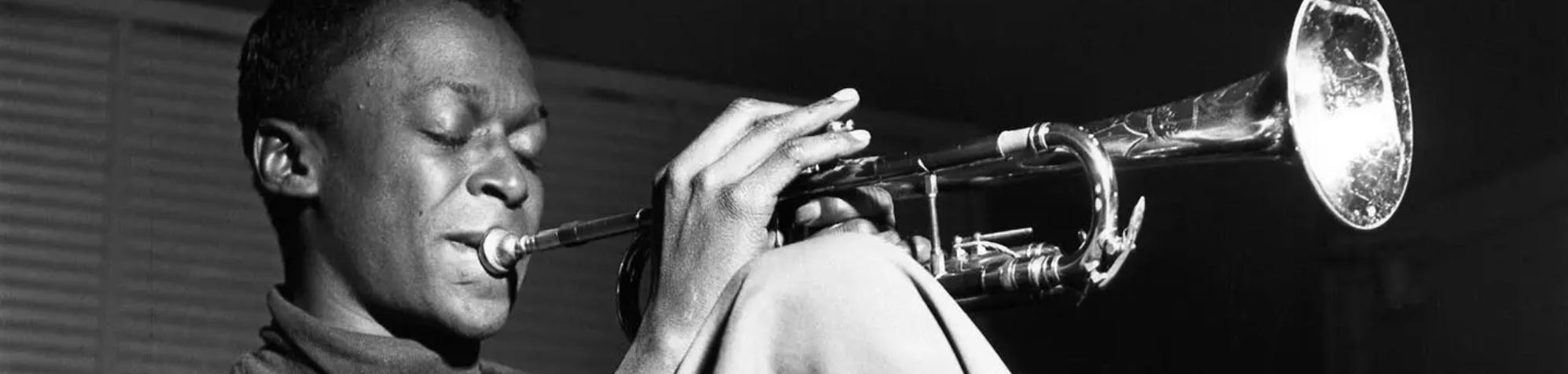
I am one of the countless who feel that Miles Davis, whose hundredth birthday would have been today, is the most important and indelible artist in my experience. Books, articles, and theses have been written about him, so today I am taking out the lens to look only at the last two chapters of his musical legacy, the two that still intrigue and sometimes vex me.
Everything Miles did before about 1969 was absorbed into our musical culture (and other cultures: sartorial, political, attitudinal, even verbal) by 1980 or earlier. His transformation of older standards, the sophistication of his idiosyncratic trumpet style (only sometimes minimal but always hip), his impossibly great bands, and even the malleable post-bop mutations of his 1960s quintet: all were easily digested if not properly equalled.
But the abstract and atonal funk of the 1970s didn’t make sense to plenty of musicians or fans until the new century, and the more slicked-out funk-jazz of his 1980s “comeback” period still feels uncomfortable to many of us, not because the music was too avant-garde but because it accommodated synth textures and “pop” elements.
So, partly because Miles wouldn’t want us looking too far backward, here are my thoughts on the master’s last two chapters.
Ageless Miles Davis
Miles Davis was a maverick who defied his chronology.
He was born on May 26, 1926. He was less than ten years younger than one mentor, Dizzy Gillespie (born in 1917), and less than six years younger than another, Charlie Parker (born in 1920), yet he seemed to be at least a generation younger and, over time, beyond them. Parker died young (in 1955), but it’s hard to imagine him adapting to the changes the 1960s brought to jazz, and Gillespie lived (and played) into the early 1990s, but remained a bebopper throughout his amazing career.
Davis was more artistically nimble than most musicians a decade or more younger. He may have been a child of the depression, who burst into maturity in the U.S. 1950s, but he balanced some conservatism (for example, he played his “hit” songs, including lots of standards, for audiences long after he had started experimenting with new things) with artistic restlessness.
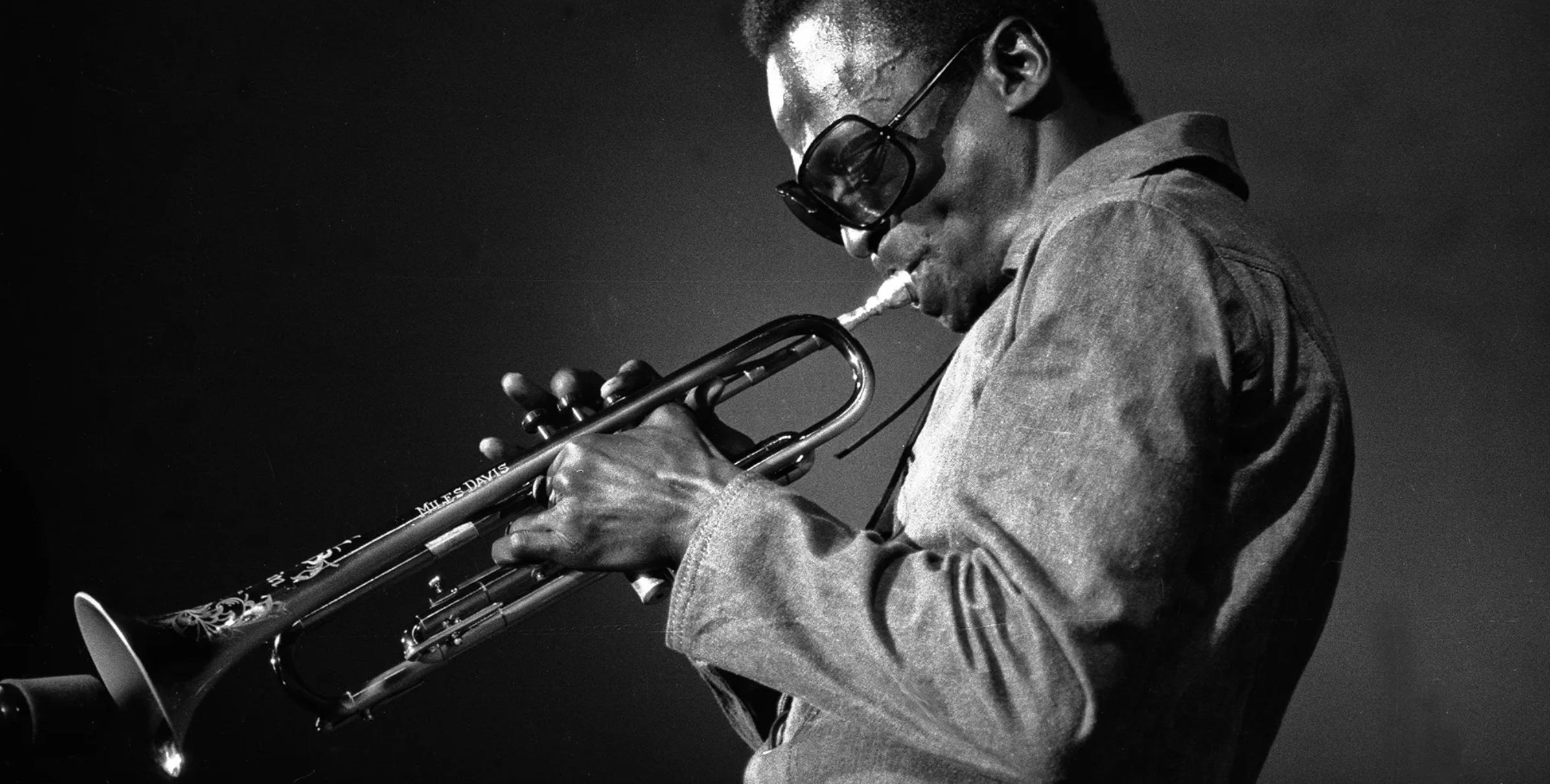
His taste for stylistic change need not be detailed yet again.1 But when his approach to the fusion of jazz with funk and rock in the late 1960s was the first time he incorporated a degree of avant-gardeism that, frankly, terrified peers and mystified most critics. There was some popular music that was edgy at the time, but little-to-none of it was made of album-side-long grooves without verses/choruses that leaned heavily on improvising that could be increasingly atonal. The notion that Miles was just chasing record sales (though, in a great example of how the early 1970s were a singular cultural time, he achieved them) is simply funny today.
Rather, his music after about 1969 was the first time he flew out into the largely unknown. I want to look at his two musical chapters after that through a personal and then a contemporary lens.
Miles Davis, 1969-1975
Too Far Ahead For Just About Anyone: Miles’s Electric Avant-Funk
I wasn’t listening to jazz in 1969, when Miles, after a gradual transition, jumped from playing dazzling post-bop to creating long, open jams based on funk music. I started listening to him by digging his albums from the 1950s, gradually absorbing the older music and the newer music at the same time.
I remember the first time I heard In a Silent Way (1969) when I was 14 in 1975. I thought it was hypnotic and beautiful. It pleased me by having just enough in common with Kind of Blue and with the accessible jazz that I liked from The Crusaders. I immediately bought Bitches Brew, recorded by Miles just six months after In a Silent Way, and found it forbidding and baffling. Rather than serene, it was agitated. The improvising not only went beyond “the chords,” but I felt that there weren’t any chords.
It sounded like chaos to my 14-year-old. But I kept listening to it anyway. It was Miles. And it had some kind of pull on my ears.
The other albums that Miles had released since 1970 all looked too forbidding to coax $8.99 out of my teenage pocket at the Disc-o-mat. But then, in 1976, there was a brand new American release with a cool name and cover: Agharta. Not only that, but I had read that Miles had retired. This, I thought, is likely to be his final album. I had to try it.
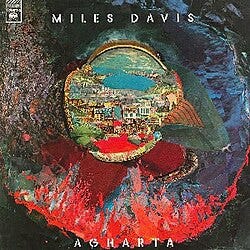
The first notes on Agharta are low rumblings of bass from Michael Henderson, then layered by funk guitar, drums, and hand percussion. A wheezing organ leaks through the groove, but then everything stops on a dime as the organ or a synth oversurges, cuts back, and distorts … then back to the funk. No “melody,” no jazz sounds (like, you know, a trumpet solo from Miles Davis) until 2:30, when he enters using a wah pedal.
I tried it, and I didn’t like it.
Neither did most critics, who found it monotonous, crude, or worse. Gary Giddens slayed the record in The Village Voice. Even Lester Bangs couldn’t make sense of it, though he wanted to. Miles wasn’t selling out — he was down the road and around the corner.
But here is what was curious about my encounter with Agharta. As I kept returning to Bitches Brew, I realized that the most recent band and this 1975 live album, with its two out-there guitars (Pete Cosey and Reggie Lucas), bass/drums/percussion (Henderson, Al Foster, and James Mtume), and single saxophonist (Sonny Fortune, who sounded pretty good, even on my first listen), featured a stripped-down septet. Compared to Agharta, Bitches Brew was an even crazier maze of instruments (three keyboards, guitar, two reeds, double drummers, electric and acoustic bass).
But the sounds of Bitches Brew were linked back to “jazz” a bit more — for example, I could hear how the electric pianos were playing lines and licks.
That music, a bafflement to me just a couple of months before, was starting to make sense. Miles Davis was teaching me how to listen more closely.
Making Sense of It All
Somewhere down the line, I could hear it, Bitches Brew, Agharta, and most of the Miles albums in between. But it took more listening: to Julius Hemphill’s Dogon A.D., with its relentless groove and soloing outside the pull of the tonic; to early Prince albums that led me to the entire James Brown catalog; to Karlheinz Stockhausen, who layered electronics into 20th-century classical music; to African drumming that exulted in making sandwiches of contrapuntal drumming; to guitarist Sonny Sharrock who crackled with distortion but was surely playing “jazz”; and then to a generation of newer jazz musicians who had, perhaps, been digesting ‘70s Miles just like I had been and were now ready to develop its ideas.
The first time I listened to Bitches Brew and locked into its brilliance, it simply occurred to me that Miles had shifted his art away from melody and toward rhythm — but also that he had displaced (composed) melody from his horn to the bass player.
Why should this have taken me by surprise? Miles had done precisely this on what is probably his most famous song, “So What.”
On this classic tune, originally on the (eminently listenable) studio album Kind of Blue, the acoustic bass plays the famous melodic line, with piano and horns merely punctuating it with the two-note answer figure (“So what?”). The band, and I love this version with Tony Williams and Ron Carter mercilessly swinging on drums and bass, takes off with ferocity, and the soloists improvise over the groove and the structure, which flips between two modes a half-step apart.
Now listen to the title track to Bitches Brew. There is an introductory section that focuses on the trumpet playing between rhythm section bits, but the identifiable “melody” begins at 2:50 on Dave Holland’s bass.
Miles, working with producer Teo Macero to piece this album together from long studio jams, used this technique throughout. Here, on “John McLaughlin,” there is no trumpet, and “melody” (if you can call it that) is played in the bass register by the electric pianos while the real action is in the soloing of McLaughlin’s electric guitar in conversation with drums, percussion, bass, and the interplay of rhythm. The “melody” simply acts as a short repeated figure that is part of the rhythmic conversation.
As Miles continued to explore this kind of music until his health caused him to retire from 1975 to 1981, he would delve deeper into this strategy. Check out “Black Satin” from 1972’s On the Corner, which has both a bass line melody and a trumpet melody that interlock, but it is that bass line that carries the tune, as if this were a track from James Brown or Sly Stone, both of whom Miles was checking out at the time. Put another way, the sing-song trumpet melody almost sounds like a high-register bass line as it is repeated in the background as Miles takes his wah-wah solo.
This had always been Miles’s great talent — he listened to other artists and incorporated what he loved into his own language. His first great quintet from the 1950s was indebted to Ahmad Jamal’s trio (in both style and repertoire), yet it was his band that refined and extended the art so that it is the Davis band that we still listen to today. His 1960s quintet used elements audible in earlier music by Charles Mingus (flexible tempos, for example) and his former bandmate John Coltrane (motivic composition and improvisation flying free of chordal structures) but refined them with the help of a perfectly constructed band of younger, genius musicians.
In these 1970s albums, Miles wasn’t the first jazz musician to use rock or funk grooves, to electrify his band, or to build an improvising ensemble of amazing freedom, but ran further ahead of the pack and forced groups to catch up across several decades.
Hearing It Again in the New Century
Musicians were chasing (or maybe sometimes circling) the Miles Davis of the 1970s for a long time.
Ornette Coleman formed his electric band, Prime Time, in 1975, the same year that Miles bowed out of performing and recording. Ornette had two guitarists as well, with more than one drummer. But Prime Time, while dealing with some elements of funk, was mainly an electrified extension of Ornette’s “harmelodics” concept. You couldn’t mistake Prime Time for Miles’s electric groove band in a million years.
From the Prime Time fountain sprang the drummer Ronald Shannon Jackson’s Decoding Society, and the band Last Exit with Jackson, bassist Bill Laswell, guitarist Sonny Sharrock, and saxophonist Peter Brotzman — wilder still by a wide margin but purveyors of noise-rock and shredding more than groove. Following that thread, you will find Jackson also a key driver in the trio Power Tools, with guitarist Bill Frisell and the bassist Melvin Gibbs in 1988, a power trio of another shade. And moving in that direction, there is more great music (for example, the Gateway Trio with electric guitarist John Abercrombie joining Dave Holland’s bass and Jack DeJohnette’s drums, but its relationship to Agharta is increasingly distant.
I’m not making the argument that Miles Davis prefigured hip-hop, but I think it is true that we don’t hear jazz that genuinely flows from Miles’s ‘70s sounds until the first wave of fusion (often intricate “jazz-rock” that made electric guitars sound like virtuosic saxophones in music that had more in common with prog-rock bands like Yes than funk) passed. Hip-hop had emerged, and the idea that deep and innovative grooves didn’t need to be either pop songs or sexy R’n’B was out there.
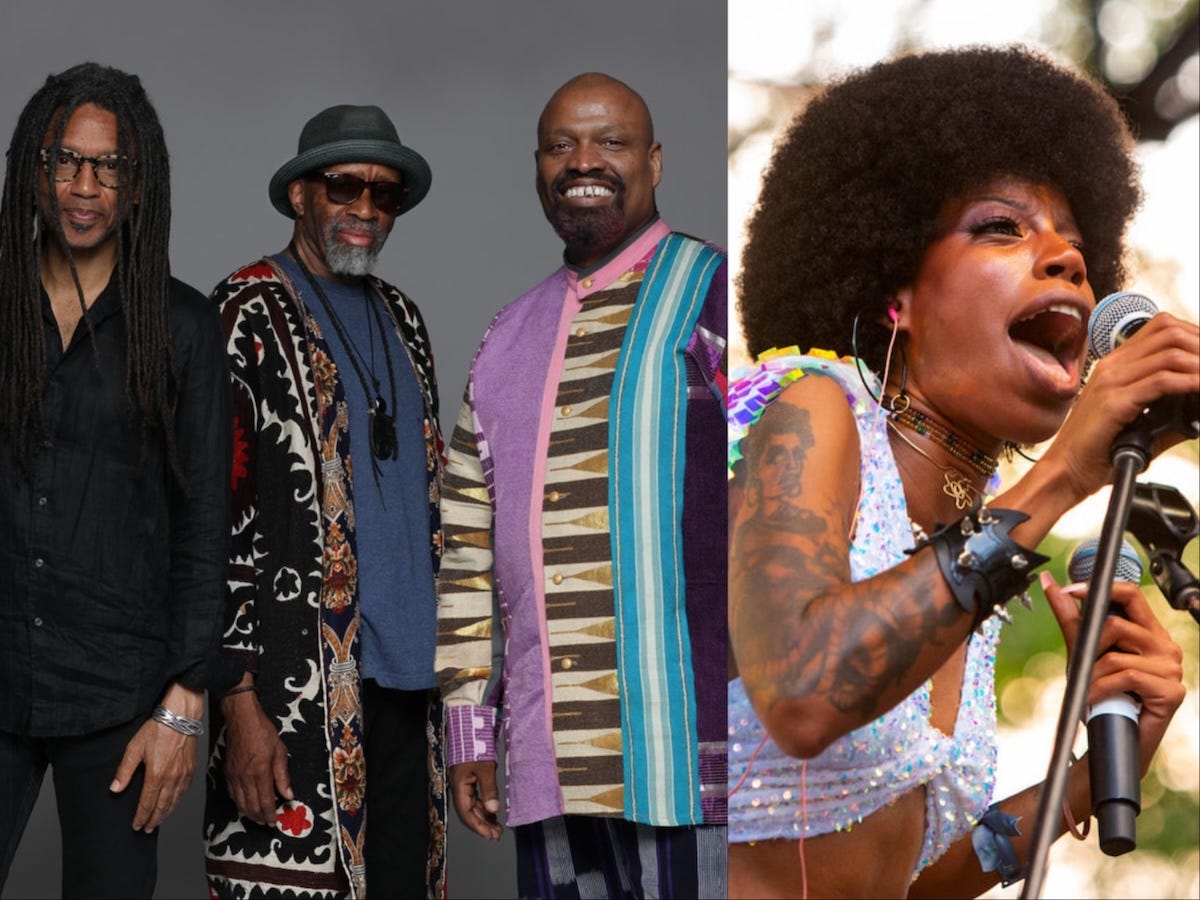
The example that has my ears enthralled in 2026 is the band Harriet Tubman, with Melvin Gibbs on bass, Brandon Ross’s guitar, and drummer J.T. Lewis. Gibbs was part of Jackson’s Decoding Society, Power Tools, a founding member of the Black Rock Coalition, and a musician equally comfortable in punk (The Rollins Band, Arto Lindsay) and funk. The heady mix that Miles challenged me (and the world) with in the ‘70s must have been second nature to Gibbs and others.
The band’s new album, Electrical Field of Love , is reviewed by me HERE and makes direct reference to the ‘70s music of Miles by having been jammed in the studio and then reassembled by the producer Scotty Hard, working in the style of Teo Macero. This music, much more than what flowed from the Prime Time/Decoding Society vein, captures what Miles had been conjuring. It’s a swamp of semi-tonal funk, a joyous mess, a rich and earthy sound.
And this band understood how this music connected back to another part of Miles’s legacy. Check out Harriet Tubman’s version of the Coltrane tune “Ascension” from 2011. The trio is joined by Ron Miles on cornet and two turntablists who provide a 21st-century/post-hip-hop twist on Miles’s twin guitars from Agharta.
What’s old is new again. Miles Davis had the ability to look around at what was happening, put it together in a new way, and then get to the future first.
Miles Davis, 1981-1991
Back to the Center? A Disappointment? A Relief?
Rumors that Miles would come out of retirement to play were always circulating toward the end of the 1970s. Herbie Hancock was organizing a 1976 concert as a career retrospective as part of the New York Newport Jazz Festival, and Miles was listed as on the bill until the last minute, when he was replaced by Freddie Hubbard (forming the “VSOP Quintet”). What was he up to? What would he sound like when/if he came back?
Older fans wanted him to revert to his acoustic classics. Younger fans suspected that Miles would never “go backward.”
By 1978, word got around that he was stirring. He was recording something with guitarist Larry Coryell. He was getting Gil Evans to work with him. He was recovering from illness. The cocaine was killing him. He’s putting together a new band. He lost his lip and can’t play anymore.
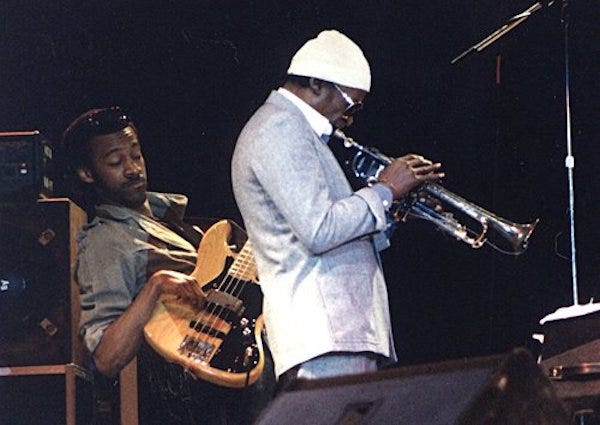
A new album was announced for 1981, The Man with the Horn. And he would play live again in a concert at Lincoln Center’s Avery Fisher Hall on Sunday, July 5, 1981. I snapped up a ticket to the first of two shows and drove with friends to New York from Washington, D.C., where we had summer jobs. I will never forget seeing the jazz critic and free speech advocate Nat Hentoff a few paces ahead of me as we entered the hall. This was it.
Miles’s drummer from the 1970s, Al Foster, was on stage, along with percussionist Mino Cinelu, bassist Marcus Miller, a guitarist we didn’t know named Mike Stern, and the saxophonist Bill Evans. Stern was arena-loud and rock-distorted. In the next day’s New York Times, critic Robert Palmer would write that his solos were “rife with the most banal heavy rock cliches imaginable,” but I thought he was fluid and thrilling but for his tone. Miller and Foster were alternately delicate and funky, making the music simmer right until it would splash with excitement. Stern, when playing behind Miles’s trademarked trumpet sound, was modern and hip. This wasn’t like one of the ‘70s bands, which critic Ralph Gleason gleefully heard as explorers leading the audience through a dense, electronic jungle, but a leaner and sexier band that was going to give each soloist a platform.
The songs weren’t like the open-ended ‘70s grooves that invited a shifting tonal center, but they were terse without being pop songs. Miles looked gaunt and older, but he started the concert with Harmon-muted delicacy and occasionally pulled out the mute and sprayed acrylic trumpet blasts of color through the hall. I thought it sounded marvelous even while a sensed that it wasn’t living up to my dearest hopes. But: it was MILES, right before our eyes. Palmer, overall, chastised Miles for sounding “positively old-fashioned” compared to bands like Prime Time and The Decoding Society. He was not wrong, but I was just so happy that Miles was back.
The Man with the Horn was a puzzle — it had a couple of jams that sounded like the concert (“Fat Time,” with Stern sounding better than he had in person) but also an embarrassing pop ditty of a title track, with cheesy vocals. A live album from the first tour featured the live group in concert (We Want Miles, 1982), and then Columbia put out Star People, 1983, Decoy, 1984, and You’re Under Arrest, 1985. More synthesizers crept into these projects, as well as the guitar playing of John Scofield, some Branford Marsalis soprano saxophone solos, and even some really lamentable cop-show banter. There was something undeniably silly about this music. Miles was chasing commercial success and relevance in his late 50s as surely any other man in mid-life crisis, even doing a cameo appearance on the TV show Miami Vice. But there was always something artful about the music. Those who heard echoes of “Surrey with the Fringe on Top” in his artful edit of Cyndi Lauper’s hit “Time After Time” were onto something.
And Then It Came Together
I wasn’t alone in feeling that string of albums got even better when Miles allowed Marcus Miller to do most of the composing and producing. Between 1986 and 1988, Miller crafted three albums with Miles that used synthesizers the right way, as eerie atmosphere and orchestration, and wedded slinky grooves to powerful melody: Tutu, Music from Siesta, and Amandla.
At the same time that Miles and Marcus Miller were finding this space — not really innovation but a cool vision of jazz fusion — the larger strain of “contemporary jazz” had gained the title “smooth jazz.” Kenny G’s first album came out in 1982, and his breakthrough (with the hit “Songbird”) Duotones was released on the same day as Tutu.
There is often something profound in small differences. This strain of Miles’s music, which sounded a little too much like Kenny G at the time, was leading to better things in the future.
Here is the singer Cassandra Wilson, interpreting “Tutu” to memorable impact on the immortal Night Music TV show with an introduction by saxophonist and host David Sanborn.
In the new century, this kind of Miles Davis music is a template for “fusion” that surpasses “smooth jazz” while still using synths, groove rhythms, and the kind of hypnotic gloss that Miles was so often the author of.
The musician who programmed the alluring synthesizers on those mid-’80s Miller/Miles albums is Jason Miles, who remains actively thinking about the Davis legacy. About a decade ago, he recruited the wonderful trumpeter Ingrid Jensen to be part of his project “Kind of New.” Superb.
And Jason Miles has a new album out right now, 100 Miles for Miles, that finds a way to build sharp orchestrations in this style.
For listeners who want to understand 1980s Miles music as having a hipper modern offshoot, I think that the current sounds out of Los Angeles are right there. Guitarist Jeff Parker and his acclaimed IVtet have a new album, Happy Today, that brilliantly uses straight backbeat, funk bass lines, shimmering electronic textures, and chilly melody to set up modern moods. Comparisons to Tutu and Amandla are not on the nose, but they should be considered.
My argument about Miles’ final years is not that they were his best. But even during times of failing health, his restless imagination and genius for melding contemporary sounds into something personal created music that was worth hearing and building upon. And musicians continue to do just that.
Miles started as a bopper, embraced cool ballad playing and texture, developed a group that set the standard for funky “hard bop,” distilled the idea of modal composition and improvisation, embraced playing outside the chord changes and set tempos within a few years of having ridiculed it — all before he eased into his encounters with funk and rock that are discussed here.
The old supposition that Davis’s transition was somehow strong-armed by Columbia Records, against his will, or oddly abrupt is no longer worth considering. Simply listening to his music in the studio albums beginning with Miles in the Sky (recorded in January of 1968) shows that he was gradually experimenting with those rhythms, amplified electric instruments, and different kinds of song forms. I date the shift from 1969, but that is (like so much else in analyzing Miles) an oversimplification.
Good point about the melody transferring to the bass register as early as "So What".
I've never gotten into Miles's final period, but I've come to see his 1969-1975 work (actually I'd date it from 1968) as his creative peak, and one of the most fertile half-decades of any 20th century musician. (Currently writing a series of articles about it, in fact.)
Great essay, Will. Appreciate how you grappled candidly with your still-evolving feelings on the music. And your comments on the 80s material are helpful as I’m still in the process of orienting myself re: that work. How do you feel abt Aura btw? That’s become a sleeper fave for me